


Blue Light Glasses: Definition, Use, Types and Benefits
Published on May 4th, 2026
 Canada


Blue light glasses have lenses designed to selectively filter short-wavelength blue light while maintaining overall visual clarity, according to M. Khorrami-Nejad, S. A. Naroo, A. Oklla, and F. Narooie-Noori's research paper titled 'Blue-light-filtering spectacle lenses in managing vision-related symptoms: an updated review', published in 2026. The use of blue light lenses, also referred to as screen glasses, is intended for protection against the potentially harmful effects that prolonged exposure to blue light is believed to have. Some claimed benefits of blue light glasses are improved visual performance with digital devices, retinal protection, and improved sleep quality, according to S. Singh's research paper titled 'Blue-light filtering spectacle lenses for visual performance, sleep, and macular health in adults', published in 2023.
Oscar Wylee BLULite filter is available to add to customers' glasses for these benefits. Some blue light glasses are tinted with colours such as red, orange and yellow. The debate of whether blue light glasses really work or if they are beneficial is still ongoing. However, as evidence shows, results are often too inconsistent to reach a conclusion, according to S Singh. Read on to learn more about blue light glasses, including their usage, benefits and different types, below.
What are Blue Light Glasses?
Blue light glasses have lenses that are made to help block or reduce the blue light that digital screens emit. The blue light from digital screens is believed to have effects that may cause harm to the eyes. These effects include eye strain, dry eyes, blurry vision and headaches. However, these are also likely symptoms of digital eye strain and dry eye, according to the Canadian Association of Optometrists. Increased screen time can lead to red eyes, watery eyes, eye fatigue, difficulty focusing, and headaches, according to Fighting Blindness Canada.
How Do Blue Light Glasses Work?
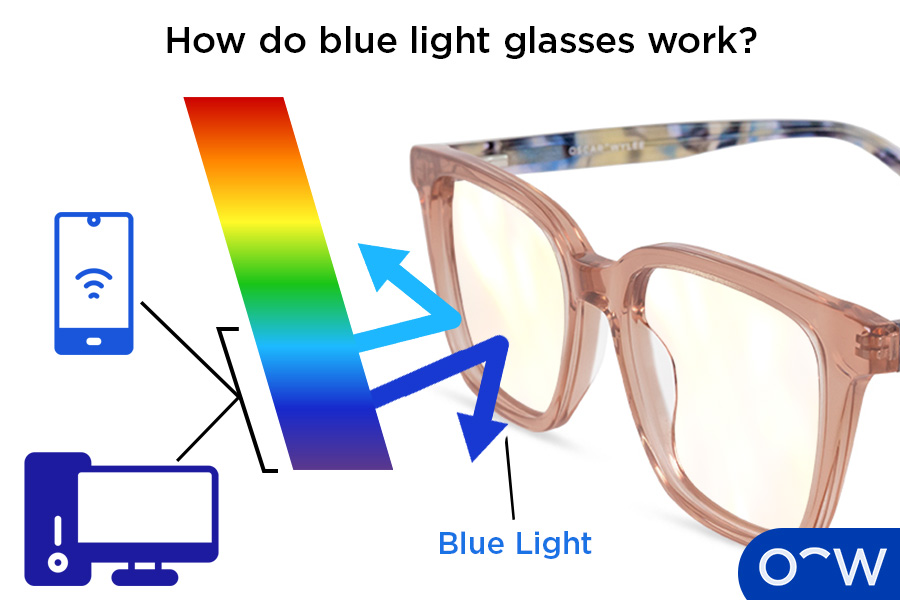
Blue light glasses work by lessening the amount of blue light that enters the eye. Blue light lenses are coated with a filter or built with a special material in the lens. The special lens coating on blue light glasses acts as a blue light filter and, as a result, either absorbs or reflects the blue light. Blue light has a short wavelength in the visible spectrum, according to Z. Zhao, Y. Zhou, G. Tan and J. Li's research paper titled 'Research progress about the effect and prevention of blue light on eyes', published in 2018. The short wavelength of blue light means a higher amount of energy and, as a result, is often perceived to be harmful when passing through the cornea of the eye.
What is the Use of Blue Light Glasses?
The use of blue light glasses, also known as screen glasses, can be used when working from a digital device as well as during recreational screen time. Blue light can come from many devices, such as laptops, computers, smartphones, tablets, gaming consoles, and LED screens. Individuals may be interested in using blue light glasses when using such devices.
Who Uses Blue Light Glasses?
Individuals who work with digital devices or those who may be experiencing discomfort in their eyes may choose to use blue light glasses. Eye problems such as digital eye strain and dry eyes are common when using digital devices for long periods. People with digital eye strain or dry eyes may associate their symptoms with their exposure to blue light. Individuals who spend their spare time on digital devices may also want to use blue light glasses for better visual comfort. Although there is not enough evidence to conclude whether blue light is harmful, it has been common for people to be more wary of the possible effects of blue light on their eyes, according to Z. Zhao, Y. Zhou, G. Tan and J. Li's research paper titled 'Research progress about the effect and prevention of blue light on eyes', published in 2018. It is a widely available option for people with prescription glasses and those who do not require prescription glasses. With the increased time spent on digital devices for work and entertainment, it is common for people to resort to blue light glasses for the computer.
What Are the Benefits of Blue Light Glasses?
The benefits of blue light glasses are improved sleep quality, as well as work performance, as suggested by evidence from a number of studies. The experience of the benefits of blue light glasses may vary between individuals. It is important to note that there is not enough evidence to support whether blue light is harmful. Therefore, the American Academy of Ophthalmology does not recommend blue light glasses. The benefits of blue light glasses are listed below.
- Improved sleep quality and quantity: Improved sleep quality and quantity may be achieved using blue light glasses, as studies have shown. Blue light from digital screens during the evening can cause disruptions to our melatonin production. Melatonin is a natural hormone produced by the body to help us feel sleepy when it is dark at night. Blue light glasses can minimize how much blue light we are taking in during evening screen time. Blue light assists us with feeling alert during the day, with the sun contributing as the biggest source of blue light. Consequently, experiencing blue light from digital devices near sleeping hours can cause excessive stimulation to the brain and hinder the secretion of melatonin.
- Improved Work Performance: Improved work performance has been a suggested outcome through the use of blue light glasses on the effects of blue light filtration on sleep and work outcomes in C. L. Guarana, C. M. Barnes, and W. J. Ong's research paper titled 'The effects of blue-light filtration on sleep and work outcomes', published in 2021. The result of improved sleep quality has an overall positive influence on work performance, task engagement and work behaviour. It is important to note that this is likely a secondary benefit of better sleep, rather than the glasses making the wearer more productive directly.
What are the Limitations of Blue Light Glasses?
The limitations of blue light glasses are their efficacy in preventing symptoms of digital eye strain, dry eyes, long-term damage from blue light and the effects of blue light. While there are a few studies that exhibit the effectiveness of blue light glasses on sleep and work improvement, the limitations also extend to whether blue light is conclusively harmful to the eyes at all. The limitations of blue light glasses are listed below.
- Preventing digital eye strain and dry eye symptoms: Blue light glasses have no effect in preventing symptoms such as eye strain, headaches, blurry vision or dry eyes. There is no clinical evidence that artificial light at a low intensity and shorter exposure periods is harmful to the eye, according to the Canadian Association of Optometrists. Therefore, symptoms that occur during excessive use of digital devices are likely caused by eye problems such as digital eye strain and dry eyes. These eye problems can develop from extended screen time and reduced blinking due to the blue light.
- Preventing long-term damage: Blue light glasses may not be useful in altering any long-term negative effects of prolonged screen time. It is strongly advised to take regular breaks while working with digital devices, use artificial tears to ensure your eyes are hydrated, and actively remember to blink more.
- Harmful effects of blue light: The effects of blue light have not been confirmed to be damaging to the eyes. The duration of our screen time may likely be the cause of discomfort.
What Are the Types of Blue Light Glasses?
The types of blue light glasses are red, orange, and yellow-tinted. Blue light glasses with red or orange-tinted lenses are designed to block more blue light. They may change the perception of the colour of your digital device screen. Yellow-tinted glasses are intended to block a narrow spectrum of blue light; this may be a suitable option for daytime use. Oscar Wylee's BLULite filter can be added to your prescription glasses. You can read more information in our article about different types of glasses. Oscar Wylee does not offer red, orange or yellow-tinted blue light glasses.
The different types of blue light glasses include kids' blue light blocking glasses, night-time blue light blocking glasses, daytime blue light blocking glasses and fitover clip-on blue light blocking glasses. The types of blue light-blocking glasses are listed below.
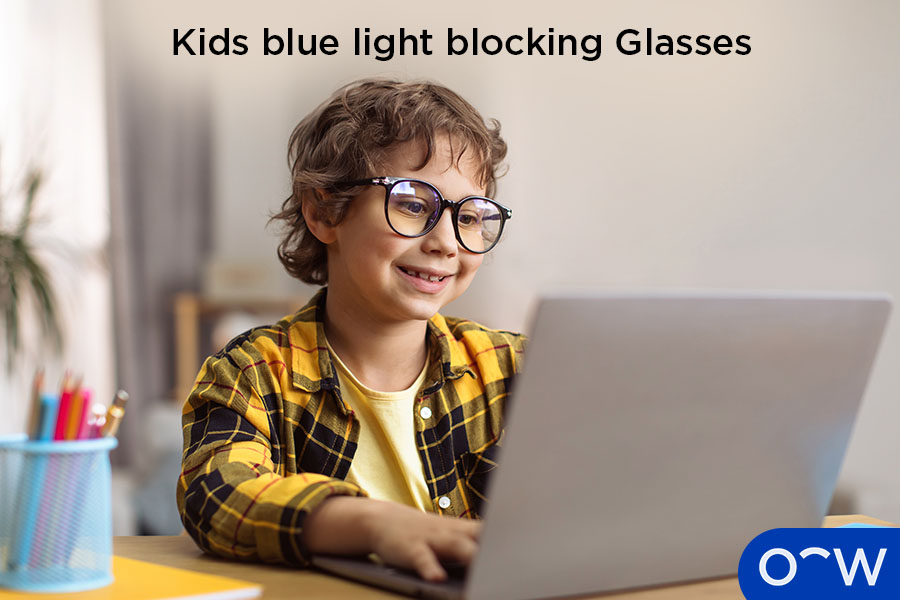
- Kids blue light blocking glasses: Kids blue light blocking glasses are the same as adult blue light blocking glasses, just smaller in size for kids.
- Night-time blue light blocking glasses: Night-time blue light blocking glasses are blue light glasses designed to be used when using digital devices at night, when it's dark and when minimal natural light is present.
- Daytime blue light filter glasses: Daytime blue light blocking glasses are designed to be worn during the day.
- Fitover clip-on glasses: Fitover clip-on glasses refer to glasses that have lenses separate from the actual glasses frame. The lenses of fitover clip-on glasses can be fitted over the glasses frame, then removed when not needed.
1. Kids Blue Light Blocking Glasses
Kids' blue light-blocking glasses refer to standard blue light glasses that have been made to fit kids. Kids' blue light blocking glasses aim to help block some of the blue light that is emitted from digital devices, including television, computers and laptops, phones and video game devices. Nearly all children in Canada are exposed to screens by the age of 2, and 15% of Canadian children aged 3 and 4 years meet screen time guidelines of less than 1 hour a day, according to the Canadian Paediatric Society. Kids' blue light blocking glasses work in the same way as adult blue light glasses, aiming to stop some of the light emitted from digital devices.
2. Night-time Blue Light Blocking Glasses
Night-time blue blocking glasses are a type of blue light glasses that are suitable for wearing at night. When using digital devices near sleeping hours, it may be helpful to wear blue light-blocking glasses to prevent the blue light from disrupting melatonin production and circadian rhythms.
3. Day Time Blue Light Filter Glasses
Daytime blue light filter glasses refer to blue light-blocking glasses that can be worn during the day. Daytime blue light filter glasses may have an anti-reflective or anti-glare coating to reduce the light reflections on the lenses.
4. Fitover Clip-on Glasses
Fitover clip-on glasses refer to a type of blue light glasses in which the blue light lenses are attached to a separate apparatus. This apparatus can then be attached to the person's frames as needed. The purpose of fitover clip-on glasses is that people can use their normal glasses with their normal lenses, and clip the blue light lenses on when needed.
Oscar Wylee does not sell fitover clip-on blue light glasses.
Do Display Devices Have a Blue Light Feature?
Yes, some display devices have blue light features which may reduce the blue light emitted from the screens. For example, Apple has a function on their iPhones called Night Shift, which automatically changes the colours on the display to a warmer hue, which can help the user get a better night's sleep. Android phones have a similar function known as an Eye Comfort Shield, which adjusts the screen's colours based on the time of day. This can also be done manually, so you can choose when to turn on the blue light features. You can find a detailed article on how to turn off blue light on my device. Many modern computers and displays will also have blue light features, as it is a much-talked-about topic in the eye care industry.
Do Blue Light Glasses Work?
It is difficult to give an answer to whether blue light glasses work, as the research is still in its early stages. While a blue light lens is effective at blocking blue light, there is no definitive evidence that these types of glasses will protect the eyes from damage. While the effects of blue light are still being discovered, there is evidence that suggests blue light has a negative effect on sleep. Blue light may cause people to release less melatonin, which aids in sleep, according to M. I. Silvani, R. Werder, and C. Perret's research paper titled 'The influence of blue light on sleep, performance and wellbeing in young adults: A systematic review', published in 2022. A blue light filter has also been suggested to help with digital eye strain, which is caused by prolonged use of digital screens. Therefore, wearing blue light glasses for computer use can be beneficial.
Can Blue Light Glasses Help with Eye Strain?
Blue light glasses can be used to potentially help with eye strain, but digital eye strain is more closely linked to time spent on screens, and is primarily managed through habits like the 20-20-20 rule. Digital eye strain, also known as computer vision syndrome, is a term used to encompass a wide range of vision and eye symptoms experienced as a result of prolonged use of digital screens such as computers, phones and tablets. Digital eye strain can cause the eyes to feel fatigued, cause blurry vision and also dry eyes. A blue light lens is among the possible management tools for digital eye strain, alongside taking frequent breaks from computer use, using lubricating eye drops, wearing prescription glasses and adjusting the brightness of the screen. If you suffer from eye strain caused by looking at a digital screen, you may benefit from wearing blue light glasses for computer use.
Read Blue Light Glasses: Definition, Use, Types and Benefits in other Oscar Wylee regions and their languages.
Canada