


Hypertropia: Causes, Symptoms, Diagnosis, and Treatment
Published on February 2nd, 2026
 Canada
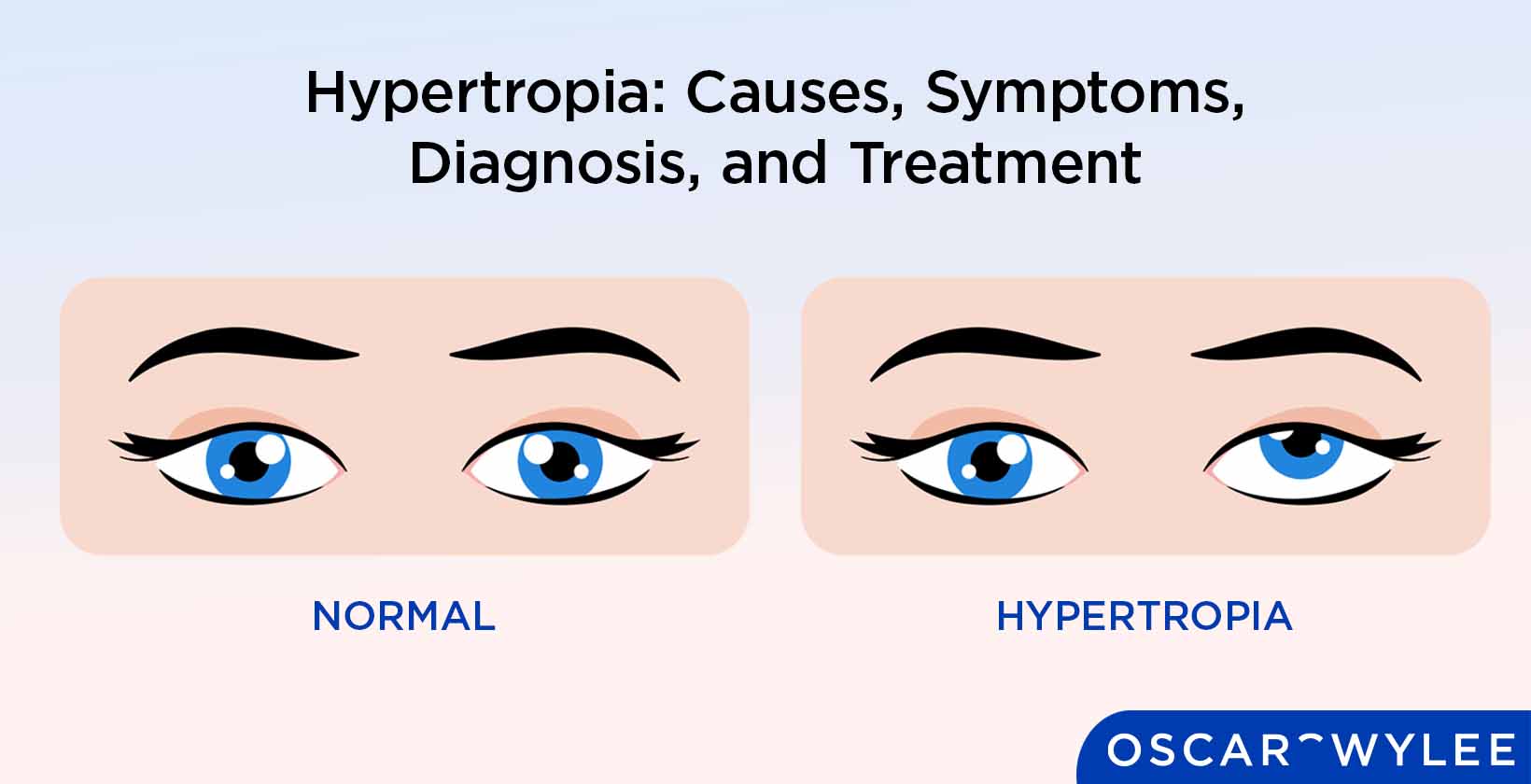
Hypertropia is a type of vertical strabismus (crossed eyes) that is caused by weak eye muscles. A hypertropia eye will be upwards turning, meaning the affected eye is higher than the normal eye. The other types of strabismus are esotropia, exotropia and hypotropia. Causes of hypertropia include Brown’s syndrome, injury in the eye, stroke and fourth cranial nerve palsy. The symptoms of hypertropia include double vision, head tilting and eye strain. It can be diagnosed through an eye exam with an optometrist who will assess the vision and health of the eyes. Hypertropia, like other types of strabismus, can be treated with glasses, patching and eye surgery. Keep reading to learn more about hypertropia.
What is Hypertropia?
Hypertropia is one of the four types of strabismus, with the others being esotropia, exotropia and hypotropia. Hypertropia is a form of vertical strabismus and is characterised by an upward-turning eye or eyes, meaning the affected eye sits higher than the other. Hypertropia is the least common type of strabismus and can occur consistently or come and go when the person is tired or stressed. Like most types of strabismus, hypertropia can be treated with glasses, patching and surgery.
In summary, the answer to what is hypertropia and the hypertropia definition is that it is a vertical form of strabismus that is characterized by an upward-turning eye or eyes.
What Does Hypertropia Look Like?
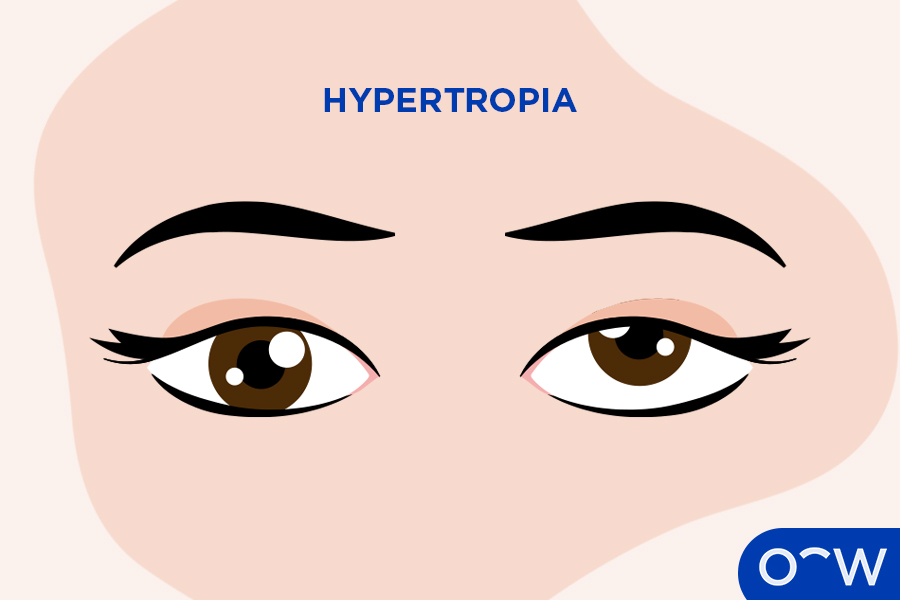
A person with hypertropia will have one eye higher than the other. Hypertropia can affect one or both eyes and is described as upward turning. This occurs due to the muscles in the eyes being imbalanced, meaning they don’t work together, leading one eye to look in a different direction than the other.
What Muscle is Involved in Hypertropia?
The muscles that are involved in hypertropia are the eye muscles. Hypertropia is either caused by dysfunctional vertical recti muscles (inferior and superior recti) or the oblique muscles ( inferior oblique and superior oblique) in the eye. In rare cases, hypertropia may be caused by irregular positioning of the horizontal rectus muscles.
How Common is Hypertropia?
Hypertropia is considered the least common form of strabismus. According to the Kana Optometry Centre, it is estimated that around 5% of the general population may have some form of strabismus.
Is Hypertropia Hereditary?
Yes, hypertropia may be hereditary, or it can be acquired later in life due to other issues or conditions. Causes of acquired hypertropia include a stroke, an injury to the eye and Brown’s syndrome. According to MyHealth Alberta, it is recognised that strabismus can run in a person’s family, although it is complex with no causative genes being identified.
Is Hypertropia a Disability
No, hypertropia is not a disability. However, if it is not treated, it may lead to complications that could result in vision loss, which is a disability that can cause a decreased quality of life. If you or your child is presenting with hypertropia symptoms, visit your eye care professional for assessment and treatment.
How Does Hypertropia Differ From Other Types of Strabismus?
Hypertropia differs from other types of strabismus as the affected eye or eyes point upwards. The other types of strabismus (crossed eyes) are esotropia, exotropia and hypotropia. Esotropia describes the eyes turning inwards towards the nose, exotropia occurs when the eyes turn outwards towards the ears and hypotropia describes the affected eye sitting lower than the other eye, meaning it is downward turning.
What are the Causes of Hypertropia?
There are many different causes of hypertropia, which is a type of strabismus. To determine what causes hypertropia, an optometrist will need to assess the person’s eye. The causes of hypertropia include Brown’s syndrome, thyroid eye disease, injury to the eye, stroke, fourth cranial nerve palsy, myasthenia gravis and Duane syndrome. These causes and their definitions are listed below.
- Brown’s syndrome: Brown’s syndrome is a condition that affects the eye muscles which can cause hypertropia as the eyes do not move properly.
- Thyroid eye disease: Thyroid eye disease is an autoimmune disease that affects the eye muscles due to inflammation, which can lead to hypertropia.
- Injury in the eye: An injury to the eye can damage the nerves or muscles in the eye, resulting in hypertropia or another type of strabismus.
- Stroke: A stroke may cause hypertropia, as this condition often affects a person’s vision due to nerve damage.
- Fourth cranial nerve palsy: Fourth cranial nerve palsy causes a nerve in the eye to not work properly, making the affected eye unable to move down.
- Myasthenia gravis: Myasthenia gravis is an autoimmune disease that is characterised by muscle weakness, specifically in the skeletal muscles, which can affect eye movement.
- Duane syndrome: Duane syndrome is a rare disorder that causes restrictions to eye movement, specifically upwards and outwards.
1. Brown's Syndrome
Brown’s syndrome is a condition that affects the eye muscles, which can cause hypertropia as the eyes do not move properly. According to the Canadian Journal of Ophthalmology, Brown’s syndrome is a problem with the superior oblique muscle, which is on the outside of the eye, causing limited movement in the eyeball when looking up and towards the nose. With hypertropia caused by Brown’s syndrome, it is the lower eye that is actually affected, not the upward-turning eye, as the lower eye is unable to look up, causing it to stay looking forwards. Brown’s syndrome can cause double vision and does not often respond to treatment.
2. Thyroid Eye Disease
Thyroid eye disease is an autoimmune disease that affects the eye muscles due to inflammation, which can lead to hypertropia. Thyroid eye disease is also known as Graves' disease and is associated with hyperthyroidism, which is an overactive thyroid gland. Thyroid eye disease can also cause other types of strabismus and can be treated with surgery.
3. Injury in the Eye
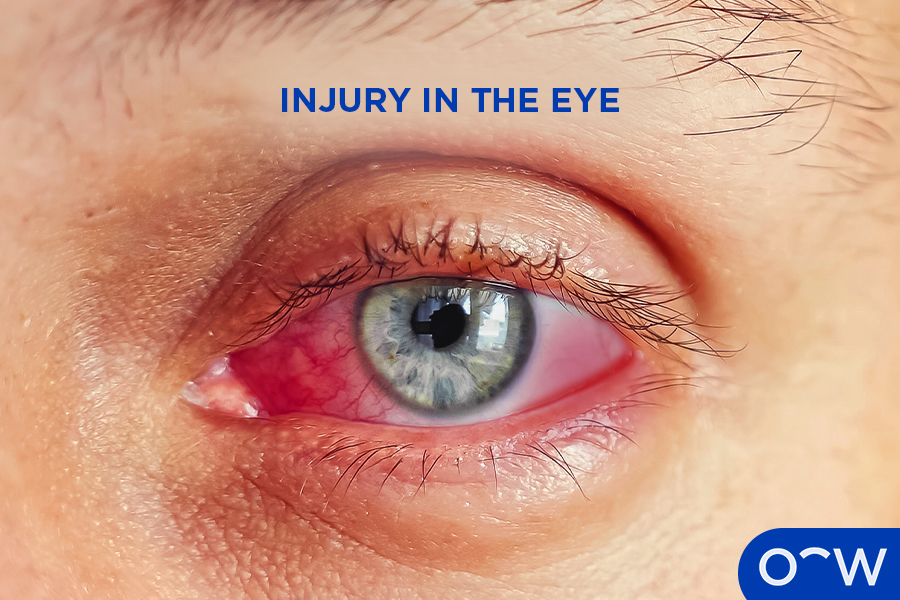
An injury to the eye, such as a hit or any type of trauma, can damage the nerves or muscles in the eye, resulting in hypertropia or another type of strabismus. A trauma-caused hypertropia can sometimes heal on its own, although it is important to have your eyes assessed if you have an eye injury.
4. Stroke
A stroke may cause hypertropia, as this condition often affects a person’s vision due to nerve damage. A stroke can cause blood clots that lead to damage to the nerves that are involved in eye movement, meaning it can result in an upward-turning eye, which is known as hypertropia. A stroke is a condition that occurs when there is not enough oxygen and nutrients going to the brain, often due to a blood clot.
5. Fourth Cranial Nerve Palsy
Fourth cranial nerve palsy is a condition where the superior oblique muscle is weak, causing the nerve to not work properly, making the affected eye unable to move down. Fourth cranial nerve palsy is often diagnosed in infancy. According to Clinical Gate, fourth cranial nerve palsy may be present at birth or from a secondary cause such as trauma.
6. Myasthenia Gravis
Myasthenia gravis is an autoimmune disease that is characterised by muscle weakness, specifically in the skeletal muscles, which can affect eye movement.
7. Duane Syndrome
Duane syndrome is a rare disorder that causes restrictions to eye movement, specifically upwards and outwards. According to the University of Calgary, Duane syndrome can cause hypertropia due to a restrictive lateral muscle or aberrant innervation of vertical muscles. Duane Syndrome can be treated with surgery on the affected eye muscle.
What are the Symptoms of Hypertropia?
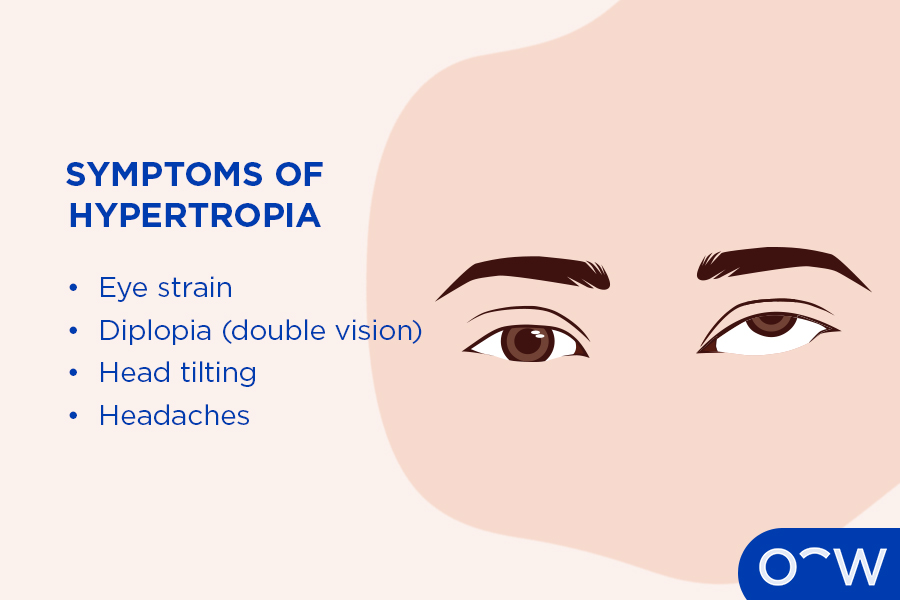
The symptoms of hypertropia are similar to the other types of strabismus, which are hypotropia, esotropia and exotropia. The symptoms of hyperopia include eye strain, diplopia (double vision), head tilting and headaches. These symptoms and their definitions are listed below.
- Eye strain: Eye strain may be a symptom of hypertropia and other forms of strabismus due to the misalignment of the eyes.
- Diplopia (double vision): Diplopia, colloquially known as double vision, is a common symptom of strabismus, including hypertropia.
- Head tilting: People with hypertropia, a type of strabismus, may turn or tilt their heads to view objects due to their misaligned eyes.
- Headaches: Headaches may be experienced by people with hypertropia as a result of double vision.
1. Eye Strain
Eye strain may be a symptom of hypertropia and other forms of strabismus due to the misalignment of the eyes. Eye strain, also known as eye fatigue, is very common and can feel like eye irritation and discomfort. Eye strain may be managed by resting the eyes or seeking treatment for hypertropia, such as glasses and patching.
2. Diplopia (Double Vision)
Diplopia, colloquially known as double vision, is a common symptom of strabismus, including hypertropia. Diplopia is caused by strabismus due to eye misalignment, as the eyes are not working together which results in a person seeing two distinct or overlapping images of an object. Double vision may lead to a feeling of nausea, dizziness and headaches. If hypertropia, or another type of strabismus, is left untreated, the brain corrects the symptom of double vision by ignoring the image seen from the weaker eye; this condition is called lazy eyes (amblyopia). Double vision (diplopia) may be a sign of a different medical condition; therefore, any acute onset of double vision needs immediate attention.
3. Head Tilting
People with hypertropia, a type of strabismus, may turn or tilt their heads to view objects due to their misaligned eyes. Head tilting may be treated with patching to strengthen the weaker eye that is not seeing straight. In the case of hypertropia, this would be the eye that is upward turning. To manage this symptom, seek an assessment from an optometrist who can provide options for treatment.
4. Headaches
Headaches may be experienced by people with hypertropia as a result of double vision which is described as pain in the head or face and a feeling of pressure or constant throbbing. Double vision may cause headaches due to the eyes seeing two different or overlapping images of an object. Headaches may be managed with rest, medication and treating the underlying cause by wearing prism glasses.
How do Eye Doctors Diagnose Hypertropia?
An eye doctor will not typically diagnose hypertropia, as they are medical professionals with a specialisation in eye care, usually dealing with issues such as advanced glaucoma. However, some eye doctors, or ophthalmologist may specialise in strabismus surgery and therefore diagnose hypertropia. An optometrist can diagnose hypertropia in a routine eye exam using various tests. Tests and assessments for diagnosing strabismus include patient history, visual acuity, refraction test, focusing and alignment test and an eye health examination. At Oscar Wylee, our eye exams typically take 20 minutes, although this may vary depending on the tests the optometrist needs to perform.
How Serious is Hypertropia?
Sudden onset of hypertropia can be a serious symptom and should be assessed by a medical professional.
Is Hypertropia Contagious?
No, hypertropia is not contagious; it is an eye condition that is characterised by eye misalignment. Hypertropia can be congenital, meaning it is present at birth or acquired, such as through an eye injury or a medical condition.
What are the Potential Complications of Hypertropia?
If left untreated, a complication that may arise from hypertropia is amblyopia (lazy eyes). Amblyopia occurs when a person’s eye has worse vision than the other, due to developmental issues causing the brain to favour the unaffected eye. If a person with strabismus, including hypertropia, does not correct the issue, it can lead to amblyopia because the brain ignores the images seen by the weaker eye. It is important to seek treatment if you notice you or your child has strabismus instead of assuming it will get better on its own.
How is Hypertropia Treated?
Hypertropia can be treated similarly to the other types of strabismus, which are hypotropia, esotropia and exotropia. According to Vision Therapy Vancouver, hypertropia is treated depending on the cause and age of the patient, as it is more common to treat this type of strabismus with patching in children to help with their development. The treatments for hypertropia include glasses, patching and surgery. Prism glasses can be used to correct double vision, and the lenses may also include a prescription if the person has a refractive error. Patching involves wearing an eye patch over the unaffected eye in order to force the weaker eye to be the main source of vision. Over time, patching assists in strengthening the vision and muscles of the weak eye, therefore, treating hypertropia. Eye muscle surgery is a common treatment that is used to treat hyperopia by changing the position and length of the person’s eye muscles in order to align the eyes correctly. If y
How Long Does it Take to Treat Hypertropia?
How long it takes to treat hypertropia depends on the type of treatment and the underlying cause of this type of strabismus. For example, following eye surgery, a patient may require vision therapy to ensure the eyes do not become misaligned again. Patching for children with strabismus may take from a month of wear to four months.
Can you Fix Hypertropia Without Surgery?
Yes, in some cases, hypertropia can be treated or fixed without surgery. The other treatments for hypertropia include glasses and patching, which are often used for children to help their eyes develop normally. Prism glasses can be worn to correct double vision, which is a vision issue that is often caused by strabismus due to misaligned eyes. Patching helps by covering the normal eye, which then strengthens the weaker eye as it is solely reliable for the person’s sight.
Do you Need Glasses if You Have Hypertropia?
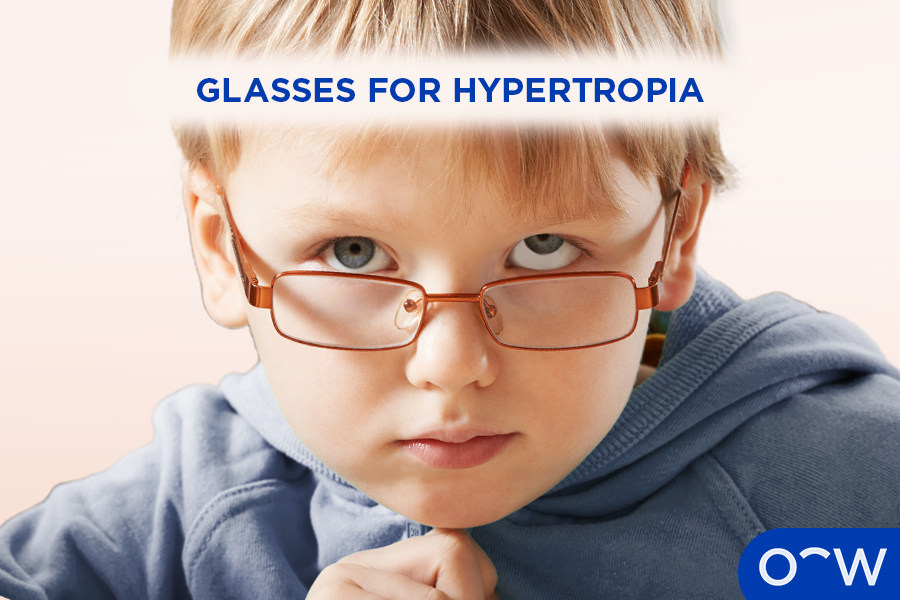
Yes, you may need glasses if you have hypertropia for different reasons. If hypertropia is causing the symptom of double vision, prism glasses may be prescribed to allow the wearer to perceive objects as a single image. Prescription glasses may also be used to bring the eyes back into alignment if there is a refractive error present. To find out if you require glasses to treat hypertropia, book an appointment with an optometrist, as they will assess your eyes and provide a diagnosis.
Can Hypertropia Go Away on Its Own?
No, hypertropia does not go away on its own, it requires treatment to address the misalignment of the eyes. Hypertropia may be treated with glasses, patching and surgery. If you believe you or your child is showing signs of hypertropia or any form of strabismus, book an eye exam with an optometrist.
Can LASIK Fix Hypertropia?
No, LASIK is not generally used to fix hypertropia. LASIK, which stands for laser-assisted in situ keratomileusis, is most often used to correct refractive errors such as hyperopia, myopia and astigmatism. Rather than LASIK, eye muscle surgery is a common treatment for strabismus. Eye muscle surgery is performed to fix crossed eyes by changing the position and length of a person’s eye muscles to correctly align their eyes. Following eye muscle surgery, a patient may need to undergo vision therapy to ensure their eyes do not revert to being misaligned.
What Type of Strabismus Eye Exercise Helps Fix Hypertropia?
While there are not many eye exercises performed specifically for hypertropia, there are general eye exercises advised for strabismus. These strabismus eye exercises include barrel cards, pencil pushups and Brock string. A barrel card is a tool used in certain eye exercises to help the eyes turn and move at the same time. A barrel card is often used to help with strabismus. Pencil push-ups are an eye exercise used to train the eyes to converge when looking at an object close up. Finally, a Brock string is a tool used to train the eyes in areas such as focusing and tracking and may help with the symptoms of strabismus and amblyopia. Eye exercises should not be performed as an alternative to seeing an eye care professional for treatment.
What is the Difference Between Hypertropia and Hypotropia?
The main difference between hypertropia and hypotropia is that hypertropia is characterised by the eyes turning upward, and hypotropia occurs when the eyes turn downward. Other than the direction of the affected eye, there are not many other differences between hypertropia and hypotropia. They are both types of vertical strabismus and may be treated with patching, glasses and surgery. Hypertropia and hypotropia have similar symptoms, such as double vision and headaches, although they look different visually.
Read Hypertropia: Causes, Symptoms, Diagnosis, and Treatment in other Oscar Wylee regions and their languages.
Canada